
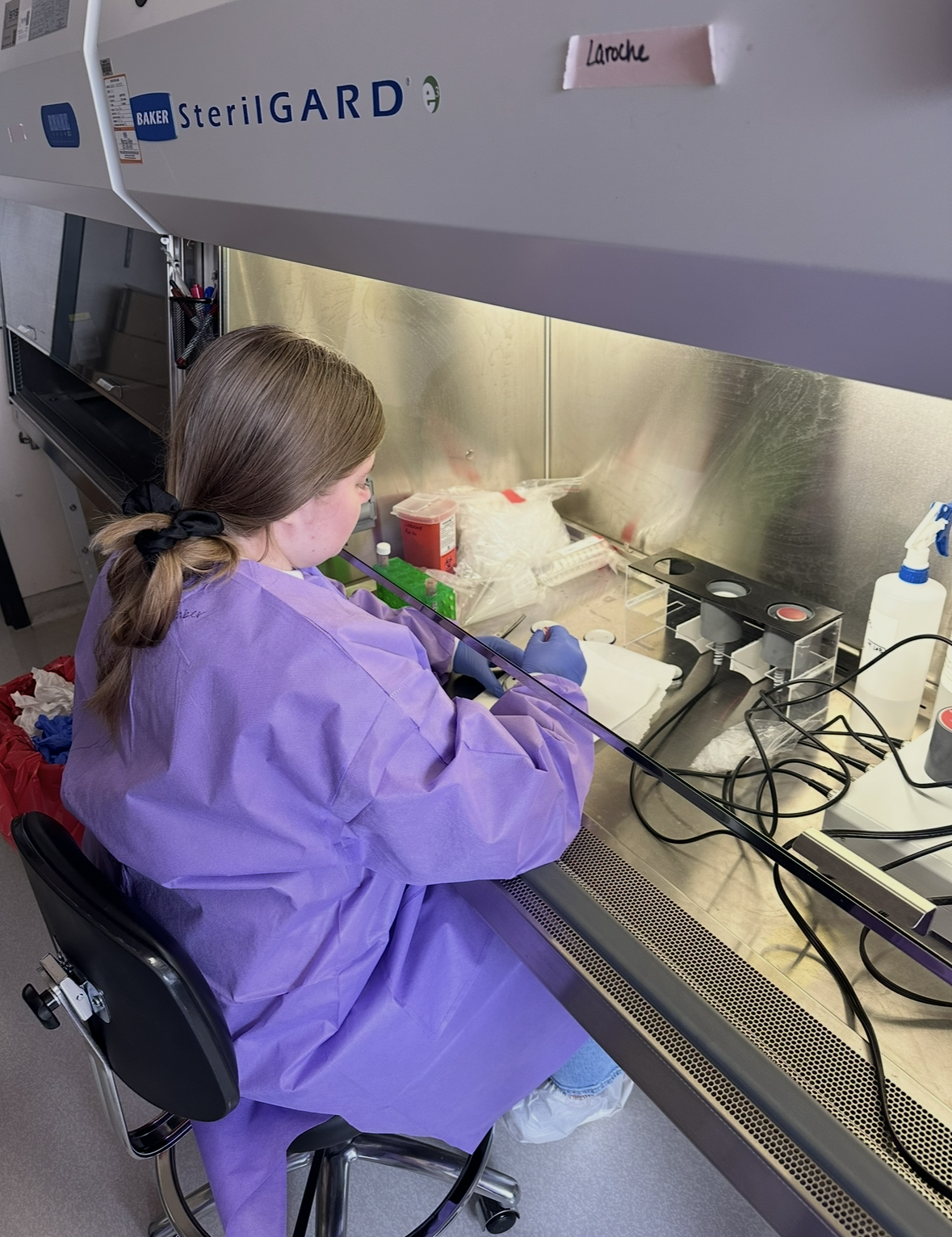
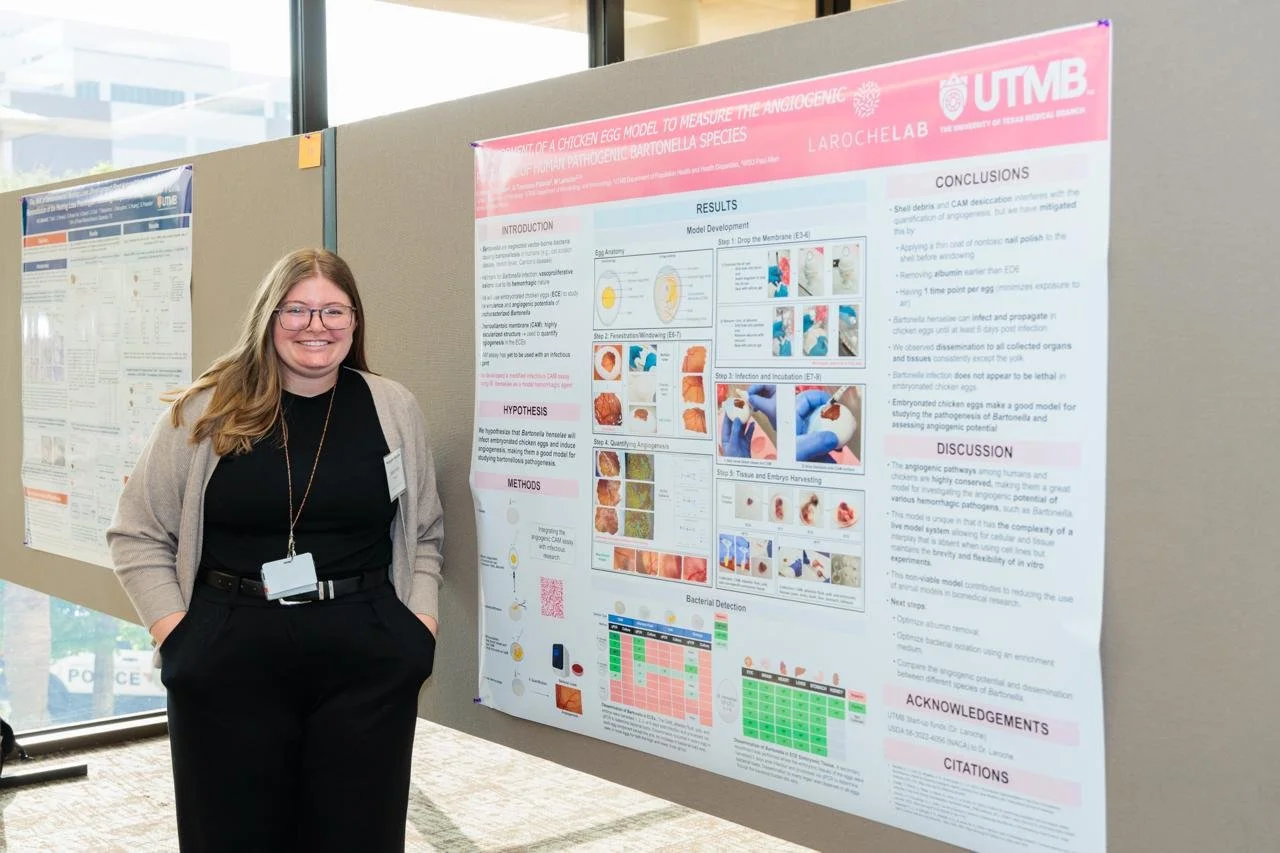
She rotated with us when my lab was so new, our BSCs still had tape with my name on it (photo 1) and now she’s all grown!!!
Amber is officially a PhD Candidate!
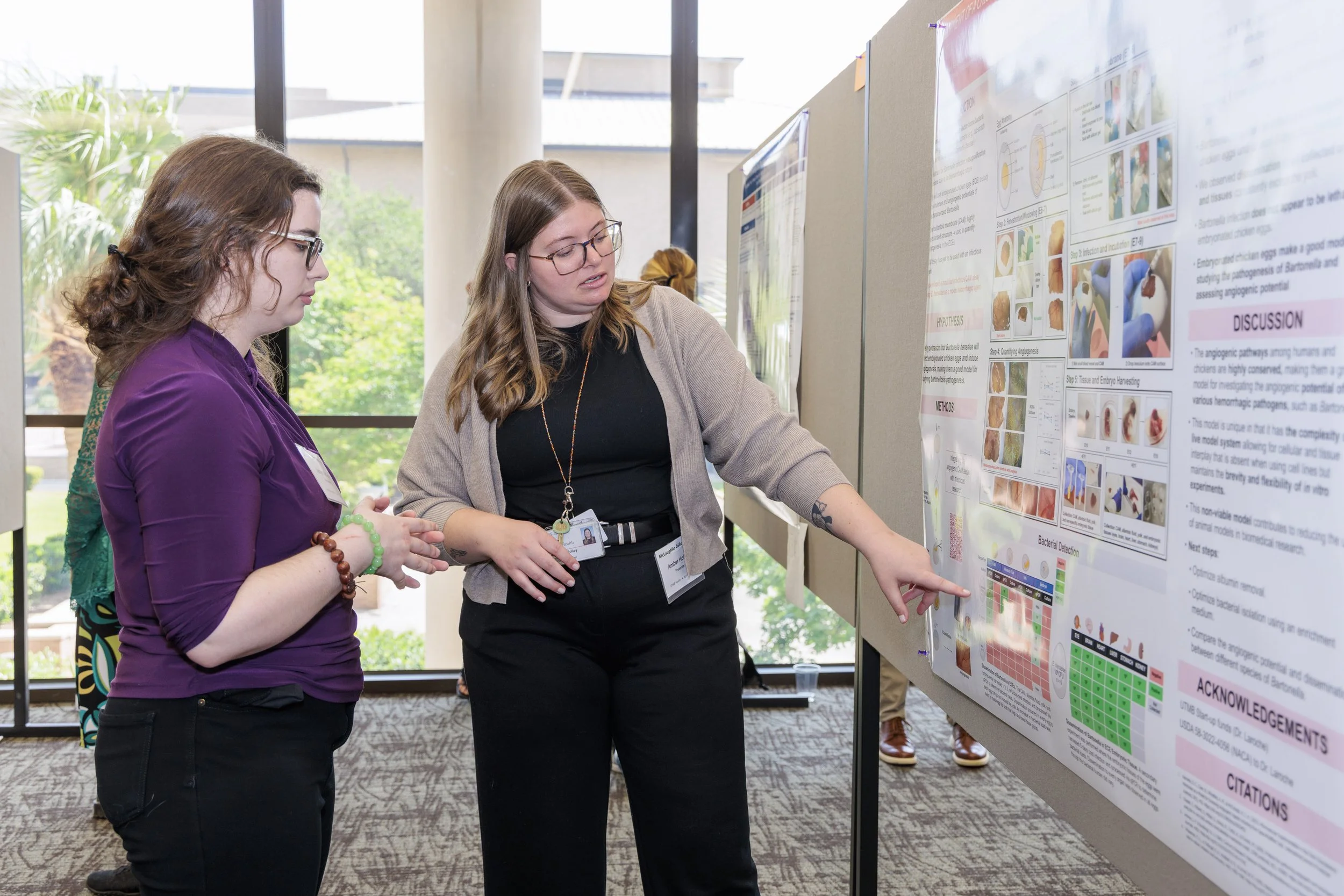
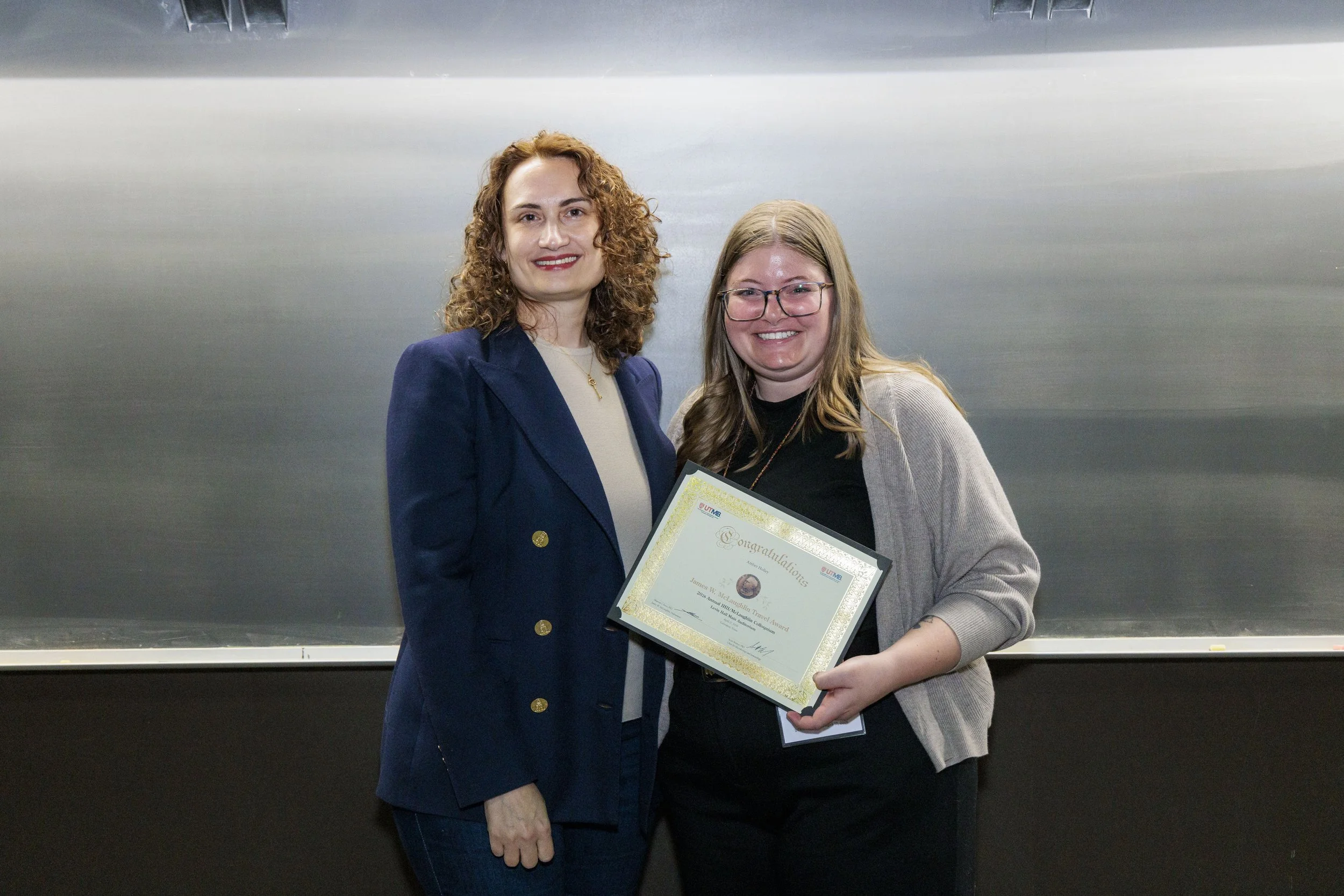
Amber presented her research at the 2026 McLaughlin symposium and won a Travel Award, presented to her by Dr. Rossi.
UTMB McLaughlin Symposium 2026
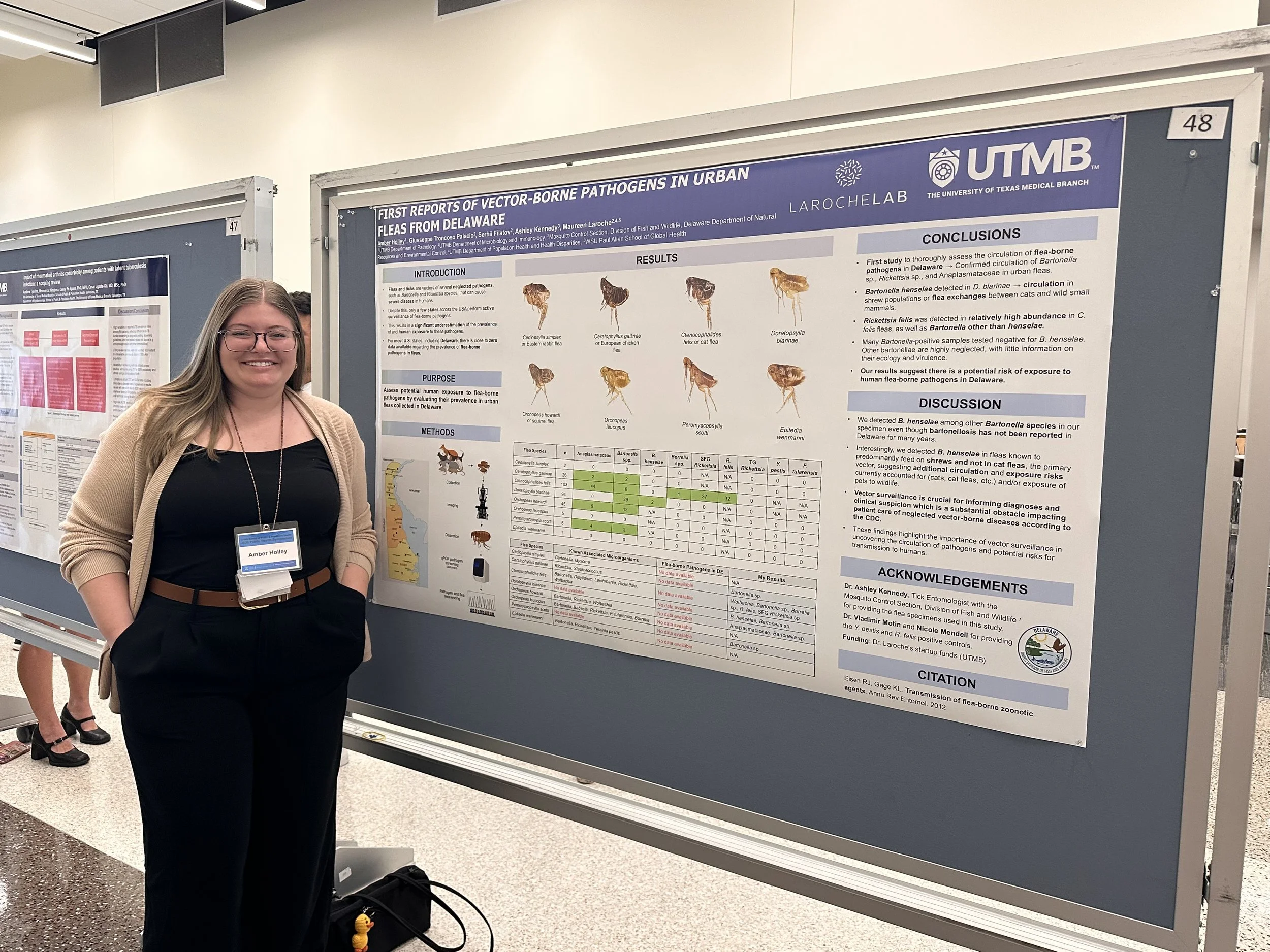
UTMB Public Health Symposium 2026
This year, Amber presented her research on vector-borne pathogens associated with fleas in Delaware.
Fleas and ticks were collected by Dr. Ashley Kennedy from the Mosquito Control Section, Division of Fish and Wildlife, of the Delaware Department of Natural Resources and Environmental Control (DNREC) and sent to UTMB for screening.
Molecular analyses showed that Bartonella species in urban environments are way more prevalent and diverse than often assumed.
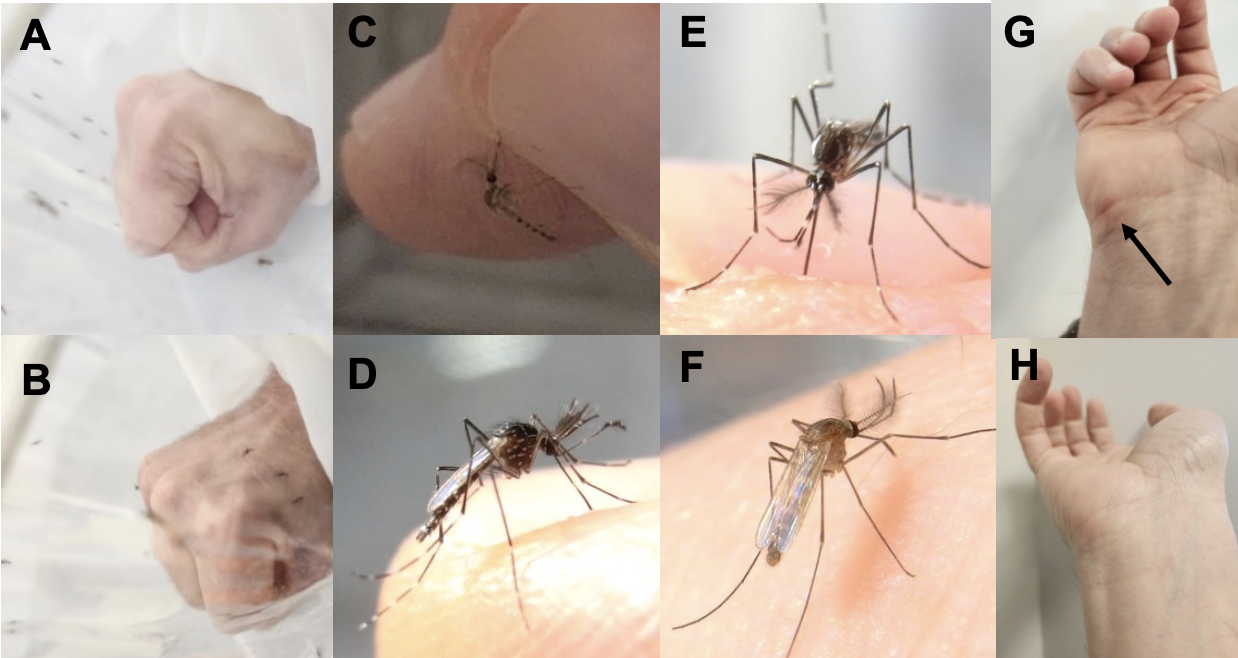
Male mosquito feeding
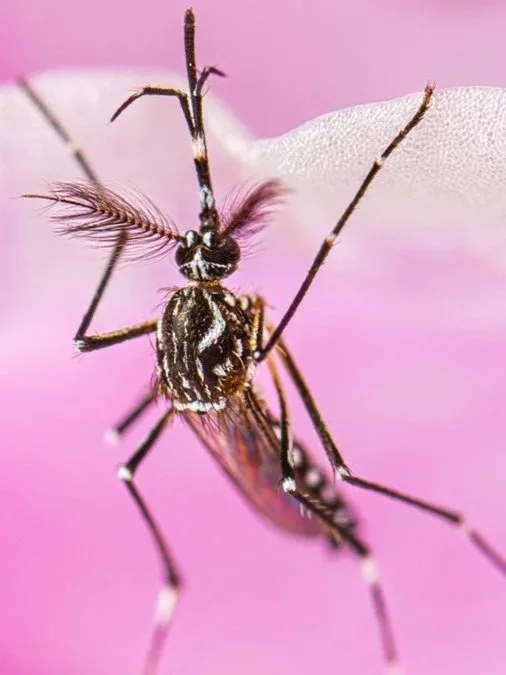
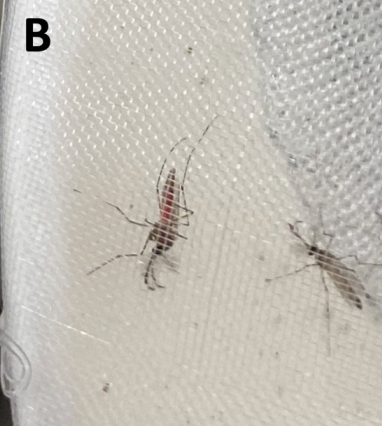
One of the most established dogmas in medical entomology and vector biology is that only female mosquitoes bite. We learn this as baby entomologists, and it is probably common knowledge.
In collaboration with Dr. Jason Rasgon at Penn State University, we showed that male mosquitoes can take a blood meal from a host and can even become infected with arboviruses, such as West Nile virus.
Have we simply missed that male mosquitoes have been feeding on blood the whole time? Maybe, but it’s not as simple as an observation bias. Mosquito anatomy and physiology support these observations, as males seemed unable to pierce the skin and to digest blood. Or so we thought.
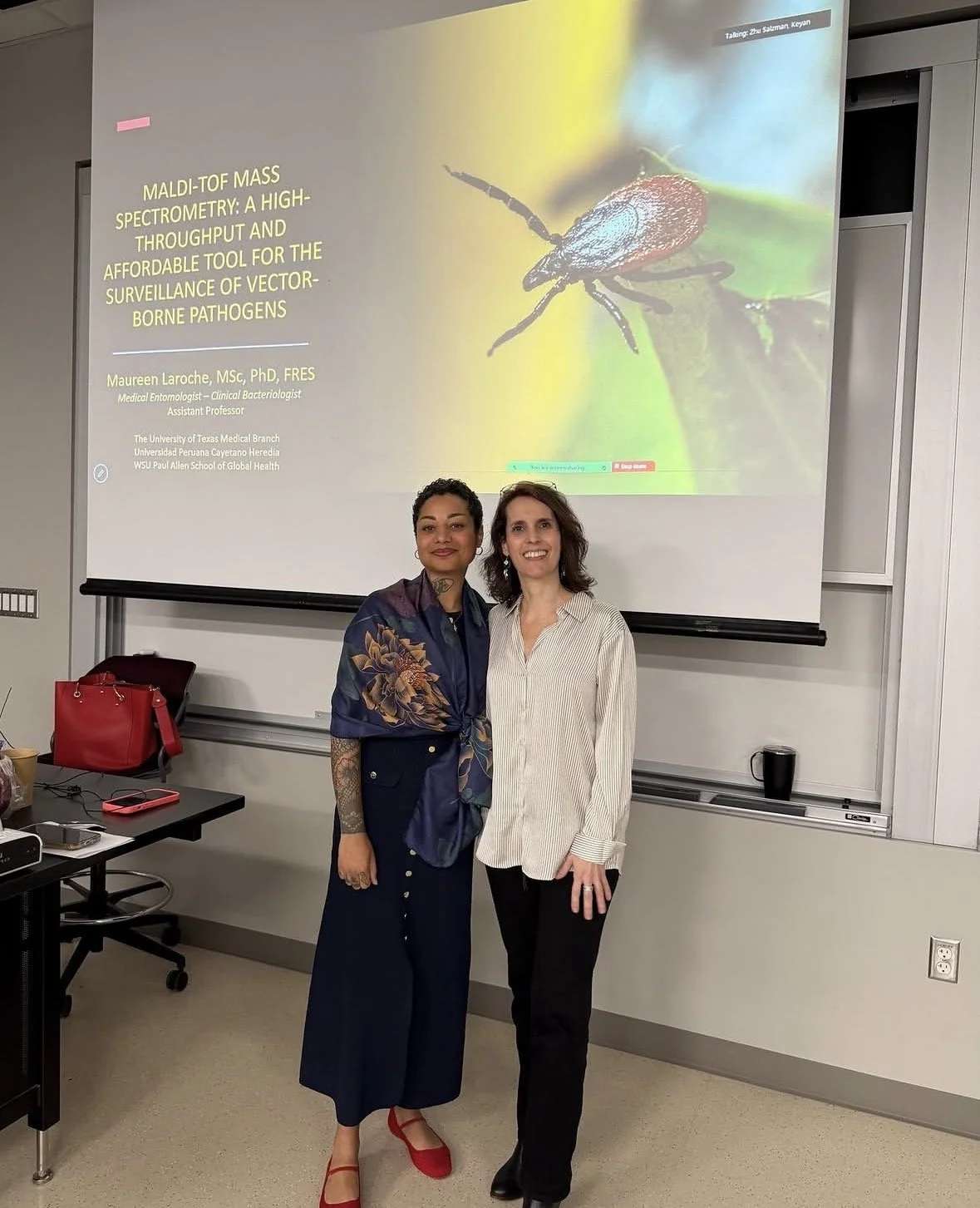
I was very glad to present our work on MALDI-TOF MS and vector-borne disease surveillance at Texas A&M.
Thank you, Dr. Tereza Magalhaes, for the invitation.
Texas A&M Seminar
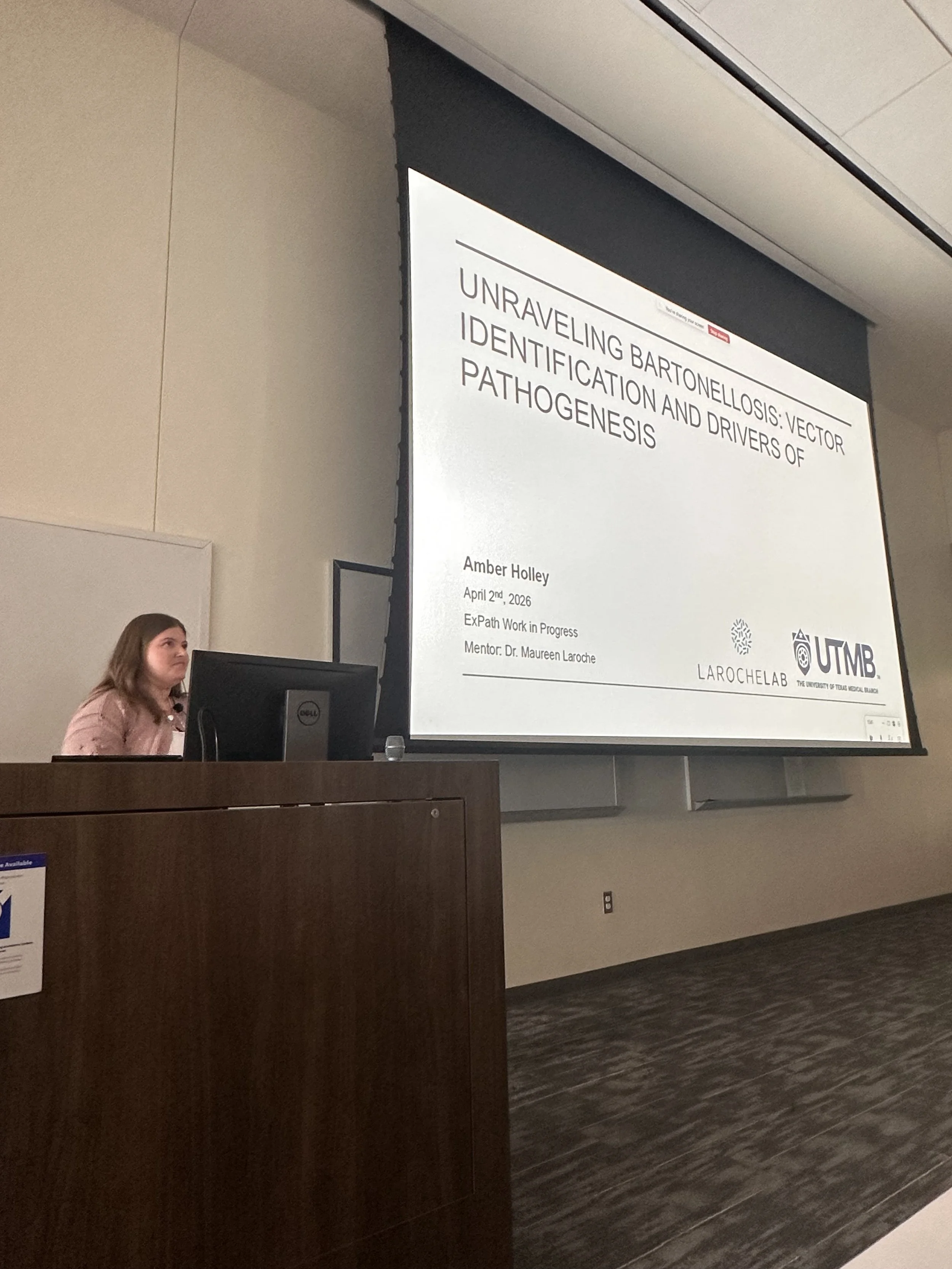
Student Annual Presentation
After a few long weeks, Amber presented her very exciting work on bartonelloses
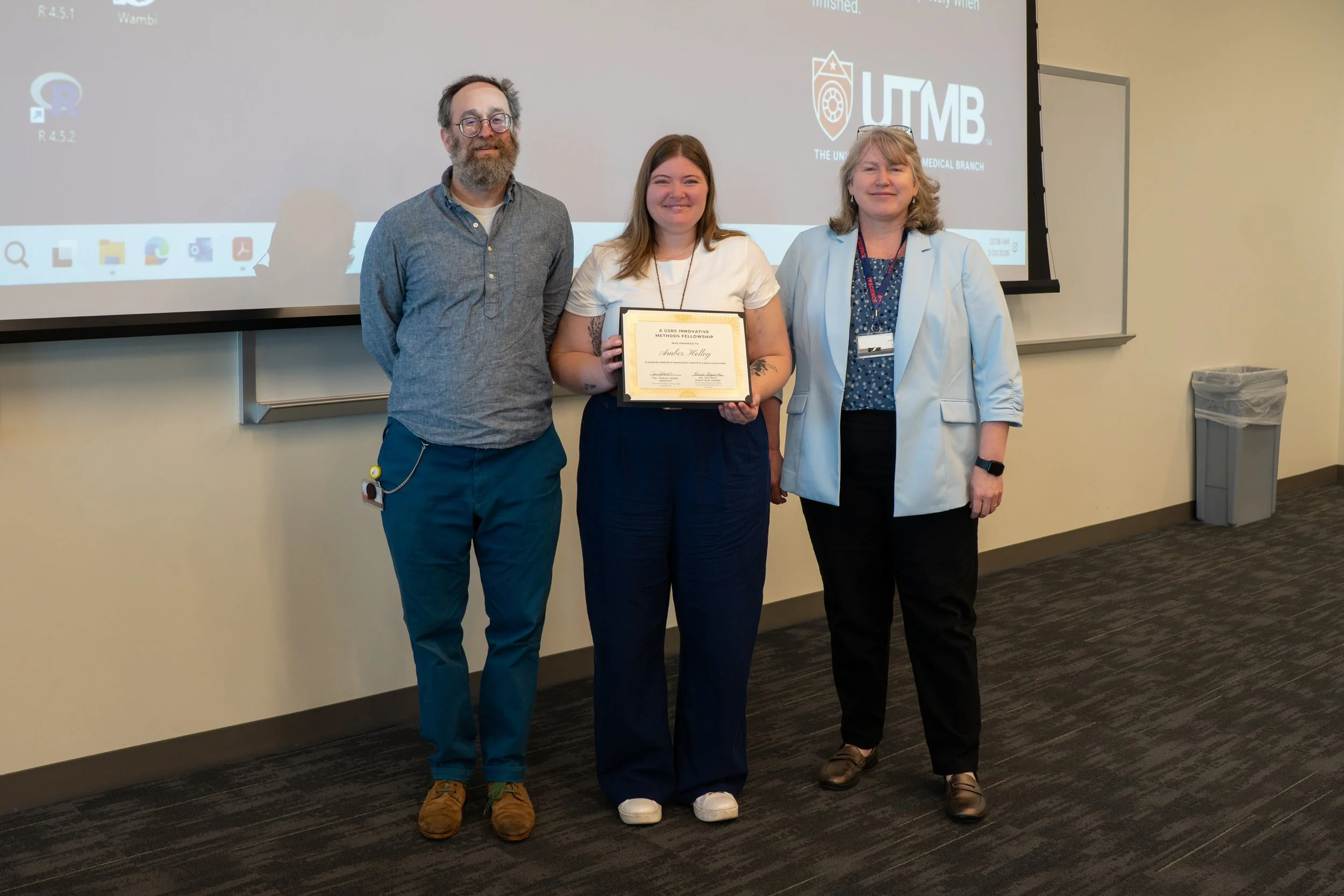
Innovative Methods Fellowship
Amber received an Innovative Methods Fellowship that supported her trip to the McKinley Lab (Harvard U) to learn methods of menstruation research.
New Program at UTMB: RABID
The Institute for Human Infections and Immunity approved my proposal for the creation of the RABID Program, which will support Medical and Veterinary Entomology training and networking in Texas.